


Volume 2, 5th Edition
May, 2022
Home » Monthly Blog- The Compass » May, 2022 Compass

Location of the Month
Abu Simbel

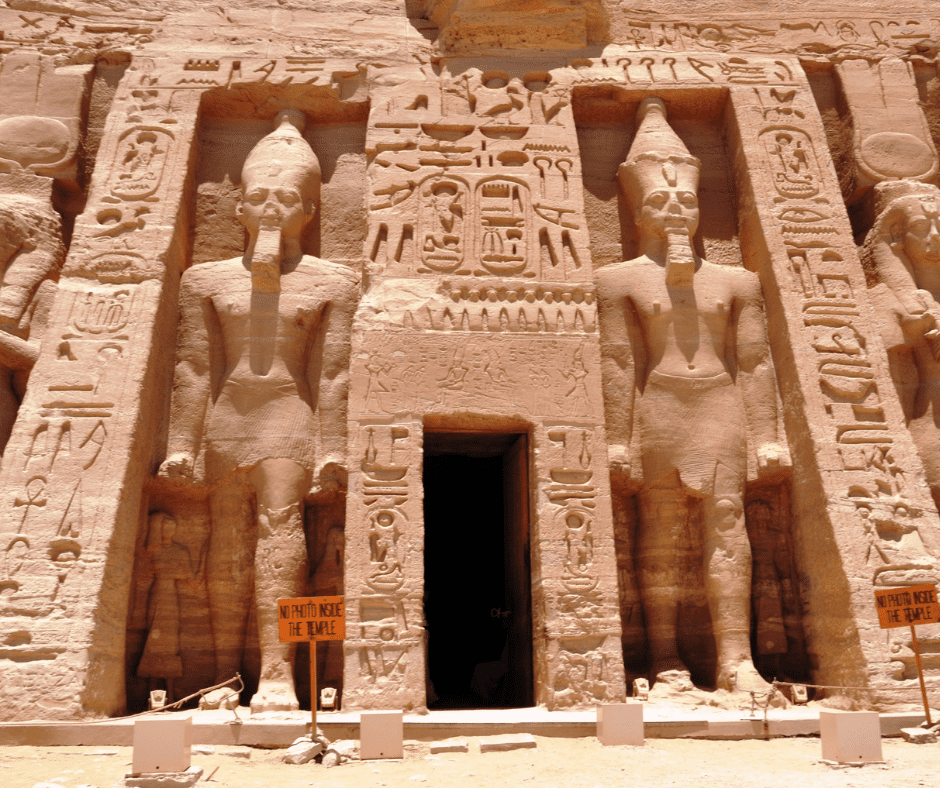
This month we are highlighting the village of Abu Simbel, site of two temples built by the Egyptian King Ramses II of the 19th Dynasty during his reign of 1279 – 13 BCE, now located in Aswan Governorate, Upper Egypt, near the border with Sudan. During our tour, we will visit two of the most breathtaking and famous temples- Temple of Abu Simbel and the Temple of Nefertari.
The Temple of Abu Simbel was erected as a dedication to the gods Amun, Ra-Horakhty, and Ptah, as well as to the deified Ramesses himself. At the front of the main temple you will see the four large statues of Ramses II seated on a throne and wearing the double crown of Upper and Lower Egypt. You will also see that at the feet of Ramses II are carved small figures representing Ramses’ children, and his queen, Nefertari.
The Temple of Nefertari is a smaller temple and is dedicated to the goddess Hathor and built by Ramses II for his 8th and favorite wife, Queen Nefertari. At its main entrance you will notice that it is adorned with four 35-foot statues, of the king and queen. There are two of King Ramses II and two of Queen Nefertari.
There are two special events that occur twice a year; once in February 22 celebrating agriculture and cultivation season, and the second in October 22 celebrating flooding season. During these dates the rays of the sun penetrate into the temple and lighten the three statues for Ramses II and Amon Both dates also reflect the date of Ramses II birth and his coronation. The location of the four statues was chosen so they would darken because Ptah was the god of darkness.
Your Egyptologist will guide you through these spectacular temples and explain the history of the site while also pointing out several architectural and structural points of interest. You will also learn about the monumental engineering feat that took place to save these two structures.
If you want to continue to explore and see the magic behind the scenes of how and what continues to hold these magnificent structures for many years to come, then consider the option of signing up for this truly amazing experience. You will NOT regret it!
Tour Highlights
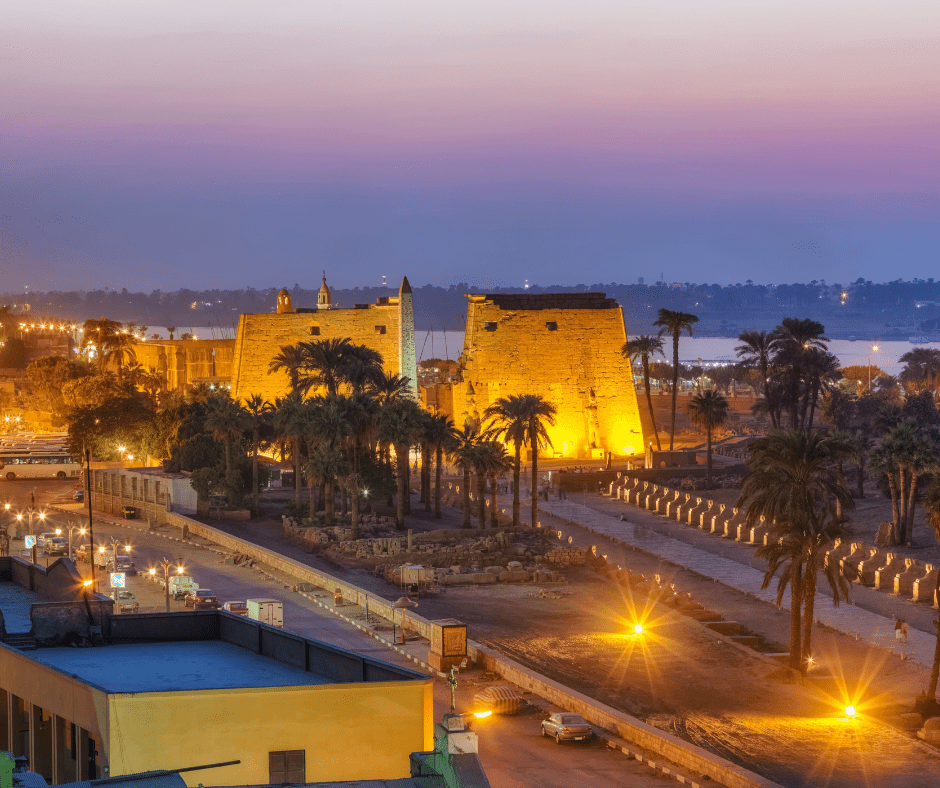
- Cairo – Giza Pyramids & Sphynx
- Abu Simbel – Temple of Abu Simbel
- Luxor – Valley of Kings- King Tut
- Karnak – Karnak Temple
- Aswan- Philae Temple
- Dendara – Zodiac Temple & Cleopatra
- Kom Ombo – Temple of Kom Ombo
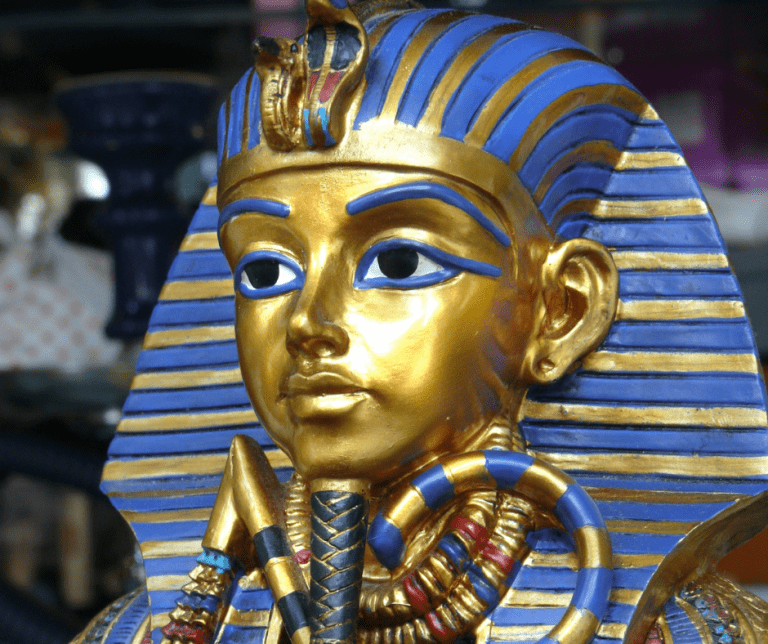
Join us in the Centennial celebration of the discovery of the tomb of Tutankhamun, along with the 200 year celebration of the discovery of the Rosetta Stone by Jean-Francois Champollion, and giving us the key for understanding ancient Egyptian hieroglyphs. An experience that is not to be missed.
Departure Schedule
Sept. 18 – Oct. 1, 2022
Oct. 9 – Oct. 22, 2022
Oct. 30 – Nov. 12, 2022
Nov. 20 – Dec. 3, 2022
Dec. 4 – Dec. 17, 2022
Word of the Month
Arabic: Aiwa
Meaning:
YES
Monthly Weather
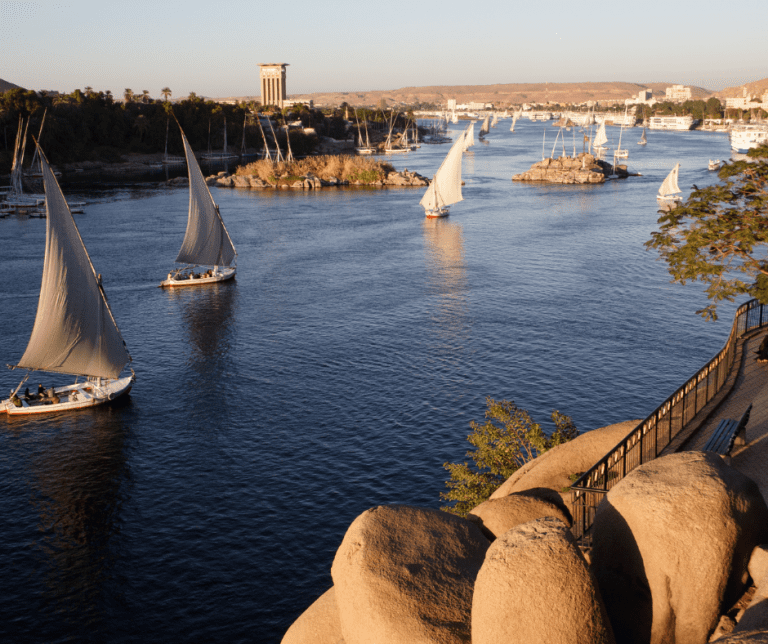
The average high-temperature, in May, in Egypt is 89.6°F (32°C), while the average low-temperature is 63.9°F (17.7°C). The average heat index (a.k.a. ‘feels like’, ‘felt air temperature’), which combines air temperature and relative humidity, in May is computed to be 92.3°F (33.5°C).
Recipe of the Month
Baklava
A traditional Egyptian staple. This dish is typically consisting of chick peas, pasta, fried onions, and a tomato sauce. It is usually served on top of a bed of white and brown rice. This dish can be found in street side food carts all the way to the finest of restaurants in Egypt. When you travel to Egypt it is a must try.

INGREDIENTS
For the Baklava and Nut Filling:
- 6 oz shelled pistachios, coarsely chopped
- 6 oz walnuts, coarsely chopped
- 6 oz hazelnuts, coarsely chopped
- 1/4 cup sugar
- 1 to 2 tbsp ground cinnamon (start with less if you’re not sure)
- large pinch of ground cloves
- 16-oz package phyllo dough, thawed
- 1 1/2 to 2 sticks of unsalted butter (up to 16 tbsp), melted
- FOR THE HONEY SYRUP
- 3/4 cup sugar
- 1 cup cold water
- 1 cup honey
- 1 tbsp orange extract (optional)
- 5 whole cloves
- 1 lemon, juice of
INSTRUCTIONS
Preheat the oven to 350 degrees F.
- Make the Honey Syrup: Place the sugar and water in a saucepan and heat stove-top, stirring occasionally, until sugar dissolves. Add the honey, orange extract if using, and whole cloves; stir to mix. Bring to a boil, then lower heat and let simmer for about 25 minutes. Remove syrup from heat and let cool to lukewarm. Add lemon juice. Remove the whole cloves.
- Make the Nut Mixture: In the bowl of a food processor fitted with a blade, add the pistachios, walnut, and hazelnuts. Pulse a few times to chop. Transfer to a large mixing bowl and add sugar, cinnamon, and ground cloves. Mix well to combine.
- Prepare the Phyllo Pastry: Unroll the thawed phyllo pastry and place the sheets in between two clean kitchen towels. This will help keep the phyllo from breaking while you work.
- Assemble the Baklava: Prepare a 9”x 13”x 2” baking pan. Brush the interior of the baking pan with some of the melted butter. To assemble the baklava, take one sheet of phyllo and place it in the pan (for this size pan, I typically fold my phyllo sheet in half, and it fits perfectly. You can also do a bit of trimming using a pair of kitchen shears). Brush the top of the phyllo sheet with the melted butter.
- Repeat this process a few more times until you have used up about 1/3 of the phyllo pastry, each layer being brushed with the melted butter.
- Now, distribute about ½ of the nut mixture evenly over the top layer of phyllo.
- Continue assembling the baklava, one sheet of phyllo pastry at a time using another 1/3 of the phyllo. Again, brush each layer with a bit of the melted butter.
- Distribute the remaining ½ of the nut mixture evenly over the top layer of phyllo.
- Finish the remaining 1/3 of the phyllo pastry following the same process, laying one folded sheet at a time and brushing each layer with melted butter. Brush the very top sheet of phyllo with butter.
- Cut the Baklava Pastry Into Pieces: Using a sharp knife, cut the pastry into 24 diamond shaped pieces (you can get up to 36 smaller pieces). (Review the tutorial above to see how I cut baklava).
- Bake: Place the baking dish on the middle rack of your heated oven. Bake anywhere from 35 to 45 minutes or until the top of the baklava turns golden and a skewer inserted in the center comes out clean. (IMPORTANT…Because ovens vary, be sure to check your baklava half-way through baking).
- Pour Syrup Over Hot Baklava: As soon as you remove the baklava from the oven, pour the cooled syrup all over the hot baklava.
- Cool Completely: Allow baklava to sit for a few hours before serving or for at least 1 hour. Cut through the earlier marked pieces. Serve with a garnish of chopped pistachios, if you like.
NOTES
- Cook’s Tip: Before you begin, thaw the baklava pastry package in the fridge overnight (review package instructions). Take it out of the fridge 1 hour before you start.
- Cook’s Tip: To save time, while the syrup is simmering begin to assemble the baklava.
- Let Baklava Sit a While Before Serving: Make sure baklava sits cools completely before serving. Baklava is even better the next day when it’s had time to absorb the syrup.
- Storage and Freezer Instructions: Be sure baklava is completely cool before storing. Cover it very well and store it at room temperature the first night, if you like. To store for a longer period, transfer the baklava to airtight glass containers and leave at room temperature or in the fridge for a few days or freeze for later use. Thaw frozen baked baklava in the fridge overnight or at room temperature for a few hours before serving.