


Volume 3, 5th Edition
May, 2023
Home » Monthly Blog- The Compass » May Compass-Temple of Horus at Kom Ombo

Tour Highlights
- Cairo | Giza Pyramids & Sphynx
- Abu Simbel | Temple of Ramessess II and Queen Nefertari
- Luxor | Valley of Kings- King Tut
- Karnak | Karnak Temple
- Aswan | Philae Temple
- Saqqara | Step Pyramid
- Kom Ombo | Temple of Kom Ombo
Location of the Month
Temple of Horus at Kom Ombo
The Temple of Horus at Kom Ombo: A Unique Dual Design in Ancient Egyptian Religion and Architecture
When it comes to ancient Egyptian temples, the Temple of Horus at Kom Ombo stands out for its unique dual design and its significance in ancient Egyptian religion and history.
Located on the east bank of the Nile River in the town of Kom Ombo, about 45 kilometers north of Aswan, the Temple of Horus was dedicated to two gods: Horus the Elder, the falcon-headed god of the sky and protector of the pharaohs, and Sobek, the crocodile god of fertility and the Nile.
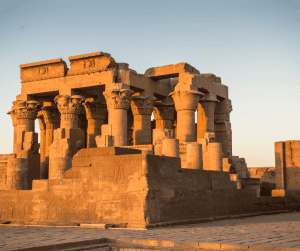
The Temple of Horus was built during the Ptolemaic dynasty, which ruled Egypt from 305 to 30 BC. However, the temple stands on the site of an earlier temple that was dedicated to the god Horus, which dates back to the New Kingdom period (1550-1069 BC).
The construction of the temple took several centuries, and various rulers of Egypt contributed to its building and decoration. The temple was finally completed during the reign of the Roman emperor Augustus, around 30 BC.
The Temple of Horus at Kom Ombo is unique in its design, as it consists of two identical temples side by side, each dedicated to a different god. The temple on the right (north) is dedicated to Horus, while the temple on the left (south) is dedicated to Sobek.
The temple complex covers an area of about 5,000 square meters and consists of several parts, including a large entrance pylon, a hypostyle hall, a vestibule, and various chambers.
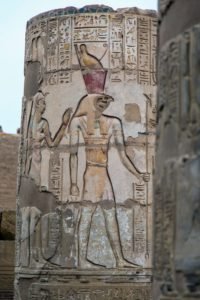
The hypostyle hall is the most impressive part of the temple, with 10 columns decorated with intricate carvings and reliefs depicting various scenes from ancient Egyptian mythology.
The temple also contains several notable features, such as the bas-reliefs, which depict surgical instruments and medical treatments, as well as the calendar, which shows the 365 days of the year and the associated gods and festivals.
Another unique feature of the Temple of Horus at Kom Ombo is the crocodile mummies, which were discovered in a nearby crypt. The crocodile was considered sacred to the god Sobek, and the mummified remains of over 300 crocodiles were found in the temple.
The Temple of Horus at Kom Ombo was a place of worship for both Horus and Sobek, and it played an important role in ancient Egyptian religion and culture. The temple was a center for healing, and many of the bas-reliefs depict surgical instruments and medical treatments.
The temple also served as a center for astronomy, with the calendar depicting the movements of the sun and the stars and the associated festivals and rituals.
The Temple of Horus at Kom Ombo is also significant in terms of its historical and archaeological importance. The temple’s unique dual design provides insights into the religious beliefs and practices of ancient Egypt, and the bas-reliefs and inscriptions provide valuable information about ancient Egyptian medicine, astronomy, and daily life.
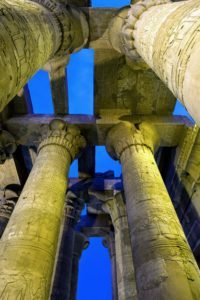
Today, visitors can explore the Temple of Horus at Kom Ombo and discover its unique architecture and features. The temple is open to visitors every day from 9 am to 5 pm, and admission fees apply.
When visiting the temple, be sure to wear comfortable shoes and bring plenty of water, as the temple complex can be quite large and hot. Also, be sure to bring a camera to capture the intricate carvings and reliefs
Upcoming Tour Dates
2026 Dates
Jan. 10, 2026 to Jan. 23, 2026
Jan. 31, 2026 to Feb. 13, 2026
Feb. 14, 2026 to Feb. 27, 2026
Feb. 28, 2026 to Mar. 13, 2026
Mar. 14, 2026 to Mar. 27, 2026
Apr. 4, 2026 to Apr. 17, 2026
Apr. 18, 2026 to May. 1, 2026
Sept. 12, 2026 to Sept. 25, 2026
Oct. 3, 2026 to Oct. 16, 2026
Oct. 17, 2026 to Oct. 30, 2026
Oct. 31, 2026 to Nov. 13, 2026
Nov. 14, 2026 to Nov. 27, 2026
Dec. 05. 2026 to Dec. 18, 2026
Jan. 10, 2026 to Jan. 23, 2026
Jan. 31, 2026 to Feb. 13, 2026
Feb. 14, 2026 to Feb. 27, 2026
Feb. 28, 2026 to Mar. 13, 2026
Mar. 14, 2026 to Mar. 27, 2026
Apr. 4, 2026 to Apr. 17, 2026
Apr. 18, 2026 to May. 1, 2026
Sept. 12, 2026 to Sept. 25, 2026
Oct. 3, 2026 to Oct. 16, 2026
Oct. 17, 2026 to Oct. 30, 2026
Oct. 31, 2026 to Nov. 13, 2026
Nov. 14, 2026 to Nov. 27, 2026
Dec. 05. 2026 to Dec. 18, 2026
Word of the Month
يوم (Yawm)
Day
Monthly Weather
The weather in Egypt in May varies depending on the region, but generally it is considered a good time to visit as the temperatures are warm but not too hot. Here are the average temperatures and weather conditions for some of the major cities in Egypt in May:
- Cairo: Average high of 33°C (91°F) and low of 19°C (66°F). Mostly sunny with occasional clouds.
- Luxor: Average high of 40°C (104°F) and low of 22°C (72°F). Mostly sunny and hot, with low humidity.
- Aswan: Average high of 42°C (108°F) and low of 24°C (75°F). Mostly sunny and very hot, with low humidity.
- Sharm El Sheikh: Average high of 35°C (95°F) and low of 25°C (77°F). Mostly sunny with occasional clouds, and warm sea temperatures.
It’s worth noting that temperatures in the desert regions of Egypt can be much hotter than those in the cities, so visitors should come prepared with appropriate clothing and plenty of water.
Recipe of the Month
Ful Medames

Ingredients:
- 2 cans of fava beans, drained and rinsed
- 1/4 cup of olive oil
- 3 cloves of garlic, minced
- Juice of 1 lemon
- Salt and pepper, to taste
- Garnishes:
- Chopped tomatoes
- Chopped cucumbers
- Chopped onions
- Chopped parsley
- Pita bread
Instructions:
- In a saucepan, heat the olive oil over medium heat.
- Add the minced garlic to the saucepan and cook for 1-2 minutes, or until fragrant.
- Add the fava beans to the saucepan and stir well to combine.
- Add enough water to the saucepan to cover the beans by about an inch.
- Bring the water to a boil, then reduce the heat to low and simmer for about 20-25 minutes, or until the beans are soft and easily mashed.
- Use a fork or a potato masher to mash the beans until they are mostly smooth.
- Add the lemon juice, salt, and pepper to the saucepan and stir well to combine.
- Serve the ful medames in individual bowls, garnished with chopped tomatoes, cucumbers, onions, and parsley, and with pita bread on the side.
Past Additions

December Compass – Celebrating Coptic Christmas and Cultural Diversity in Egypt
Explore the enchanting traditions of Coptic Christmas in Egypt and embrace the rich cultural diversity of December festivities. Discover the beauty of Cairo during this

November Compass – Celebrating Togetherness: Eid al-Fitr vs. Thanksgiving
Celebrate cultural togetherness with insights on Eid al-Fitr and Thanksgiving, bid farewell with ‘Ma’a as-salama,’ and savor the refreshing taste of Egyptian Sobia. Explore rich
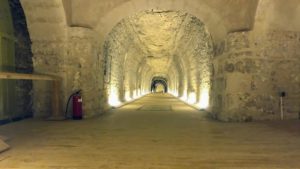
October Compass – Exploring the Mystical Wonders of Saqqara’s Serapeum
Embark on a captivating journey to Saqqara’s Serapeum and unravel the mysteries of ancient Egypt. Explore the enigmatic history, astonishing engineering, and timeless allure of